The music of Israel is a combination of Jewish and non-Jewish music traditions that have come together over the course of a century to create a distinctive musical culture. For almost 150 years, musicians have sought original stylistic elements that would define the emerging national spirit.[In addition to creating an Israeli style and sound, Israel’s musicians have made significant contributions to classical, jazz, pop rock and other international music genres. Since the 1970s, there has been a flowering of musical diversity, with Israeli rock, folk and jazz musicians creating and performing extensively, both locally and abroad. Many of the world’s top classical musicians are Israelis or Israeli expatriates. The works of Israeli classical composers have been performed by leading orchestras worldwide.
Music in Israel is an integral part of national identity. Beginning in the days of the pioneers, Hebrew songs and public singalongs (Shira beTsibur) were encouraged and supported by the establishment. “Public singalongs were a common pastime [of the early settlers], and were for them a force in defining their identity”, wrote Nathan Shahar.This view of music as nation-building continues to this day. “We are in the midst of creating a culture”, says Nahum Heyman, one of Israel’s leading music composers and music historians.Jewish immigrants from Europe, Asia, the Middle East and elsewhere brought with them their musical traditions, melding and molding them into a new Israeli sound.[
- Russian folk music
- Eastern European klezmer musi
- Rock and pop music
- Middle Eastern music
- Jewish Yemenite music
- Greek, Latin American, Ethiopian and other influences
- Land of Israel style
Early history

Jewish Brigade soldiers dancing the Hora
The first efforts to create a corpus of music suitable for a new Jewish entity that would eventually become Israel were in 1882.This was the year of the First Aliyah, the first wave of Jewish immigrants seeking to create a national homeland in Palestine. As there were no songs yet written for this national movement, Zionist youth movements in Germany and elsewhere published songbooks, using traditional German and other folk melodies with new words written in Hebrew. An example of this is the song that became Israel’s national anthem, “Hatikvah“.[The words, by the Hebrew poet Naftali Herz Imber, express the longing of the Jewish people to return to the land of Zion. The melody is a popular eastern European folk melody.
In 1895 settlers established the first Jewish orchestra in Palestine.[ The orchestra was a wind band, located in the town of Rishon LeZion, and played light classics and marches.
Avraham Zvi Idelsohn, a trained cantor from Russia and a musicologist, settled in Jerusalem in 1906, with the objective of studying and documenting the musics of the various Jewish communities there. At the time, there were a number of Jewish enclaves in Jerusalem, for Yemenites, Hassids, Syrians and other Jewish ethnic groups. Idelsohn meticulously documented the songs and musical idioms of these groups.[He also made the first efforts to bring these songs to the attention of all Jewish settlers, with the aim of creating a new Jewish musical genre.
Idelsohn was joined in Palestine by a few more classically trained musicians and ethnomusicologists, including Gershon Ephros in 1909 and, later, Joel Engel in 1924. Like Idelsohn, Engel worked to disseminate traditional ethnic tunes and styles to the general Jewish public of Palestine.

A book of Hebrew songs by Hanina Karchevsky, published 1927
The Second Aliyah, beginning in 1904, saw an increase in composition of original songs by Jewish settlers in Palestine.[ Among the earliest composers of folk songs were Hanina Karchevsky (“BeShadmot Beit Lehem”), and David Ma’aravi (“Shira Hanoar”).
Over the next 30 years, Jewish composers in Palestine began to seek new rhythmic and melodic modes that would distinguish their songs from the traditional European music they had been brought up on.Leaders of this musical movement were Matityahu Shelem (“VeDavid Yefe Eynaim”, “Shibbolet Basadeh”), Yedidia Admon (“Shadmati”), and others. These composers sought to imitate the sounds of Arabic and other Middle Eastern music. They used simple harmonies, and preferred the natural minor to melodic and harmonic minors used by European music. They especially eschewed the interval of the augmented second, part of the “gypsy minor” scale used typically in klezmer music. “Its character is depressing and sentimental”, wrote music critic and composer Menashe Ravina in 1943. “The healthy desire to free ourselves of this sentimentalism causes many to avoid this interval.”[
Some musicians of the period, like Marc Lavry (“Shir Ha-Emek”, “Kitatenu Balayla Tzoedet”),wrote in both the new Hebrew style and the European style in which they were trained. For example, “Zemer” is a song in the new style; Dan HaShomer is an opera in the European classical tradition. Others, like Mordechai Zeira, lamented the fact that they did not write in the new Hebrew mold. Zeira, one of the most prolific and popular composers of the period (“Hayu Leylot”, “Layla Layla”, “Shney Shoshanim”), referred to his inability to write in the new style as “the Russian disease”.[
Emanuel Zamir worked in the 40s and 50s in a genre known as “shirei ro’im” (shepherd songs). He combined Bedouin music with Biblical-style lyrics, often accompanied by the recorder.
Popular Genres
Early Israeli rock

Rock singer Shalom Hanoch
From pre-1967 beginnings in marginal clubs in Tel Aviv, Israeli rock music has grown to a musical force worldwide. With hundreds of bands, dozens of clubs, and many star performers, Israeli rock has grown to be “the dominant music culture in Israel.”[
The first successful rock group in Israel was “The Churchills“, formed in 1967 by guitarists Haim Romano and Yitzhak Klepter. Singer Arik Einstein, a graduate of the Lehakot Tzva’iyot and a rising star in the Israeli music world, chose them as his backup group in 1969, and together they were the first group to offer a publicly acceptable rock sound.
In the 1970s, the Israeli rock idiom was developed by:
MENU0:00Medley of songs from rock album “Shablul”, by Arik Einstein and Shalom Hanoch
- Svika Pick, first Israeli rocker to appear in punk and glam-style outfits
- Shmulik Kraus, Josie Katz and Arik Einstein who banded together to form the trio “Hahalonot Hagvohim” (the High Windows).
- Kaveret, with singer Gidi Gov and guitarist and composer Danny Sanderson. Kaveret, formed in 1972, was instant success. Songs from their album “Sippurei Poogy” (Stories of Poogy) are still played on Israeli radio today.
- Shalom Hanoch, composer, guitarist and singer.[The album “Sof Onat Hatapuzim” (The end of the Orange Season), of his songs, was released in 1976. It had the hardest rock sound of any group yet, and is considered a landmark in Israeli rock history.
Progressive rock and folk
Alongside the development of Israeli rock music, the tradition of the folk style continued.[ Singers like Chava Alberstein, Yehoram Gaon and Naomi Shemer continued to write and perform songs in the canonical “Land of Israel” style. Naomi Shemer’s songs, including “Yerushalayim Shel Zahav” (Jerusalem of Gold), “Hoy Artsi Moladeti” (Oh my Land My Homeland, lyrics Shaul Tchernichovsky), “Horshat HaEkaliptus” (The Eucalyptus Grove), have become icons in the patriotic repertoire. Much of her success, including “Yerushalaim Shel Zahav”, was due to the song contests of the time.
Bridging the parallel developments of Israeli rock and the continuation of the Land of Israel tradition was a group of musicians who sought to create an authentic Israeli style that would incorporate elements of the new rock sound. These artists include Yehudit Ravitz,[Yoni Rechter, Shlomo Gronich, Matti Caspi, as well as rock pioneers Gidi Gov, Danny Sanderson and Arik Einstein. Their style of progressive rock often adopted the lyrical ballad style of the canonical repertoire, and mixed traditional instruments—flute and recorder, darbuka, and acoustical guitar—with electric guitars, trap sets and synthesizers. Unlike typical hard rock, with its repetitive common-time rhythms and straightforward chord progressions, the songs of these artists were often complex rhythmically and harmonically. Matti Caspi’s song “Noah”, for example, has a Latin feel, with strong jazz-like offbeats, chromatic harmonic accompaniments, and words relating to the biblical story of Noah. David Broza made flamenco style music popular in the late 70s and 80s.

Kobi Oz of Teapacks
Rock was something of a musical revolution for Israel. However, unlike the rock music of America in the 1960s and 1970s, it was not always an expression of social revolution. Israeli rock, up until 1985, with the appearance of Aviv Gefen, almost never dealt with the themes of drugs, sex, youthful anger and alienation (though Arik Einstein’s “Shuv Lo Shaket” is an exception), and revolution. Its stars, with the exception of Shalom Hanoch and Svika Pick, were clean-cut Israelis, mostly with neatly trimmed hair, who had served in the army and were exemplary citizens.
Aviv Gefen changed that. Starting his career at age 17, Gefen appeared on stage in drag and heavy makeup, bragged about his evasion of the draft, and sang about drugs, sex and alienation in a hard-rock style reminiscent of Punk Rock. His music struck a deep chord among Israeli youth. He also symbolised the break with the old traditions, though his Beatles and Pink Floyd influenced music was in no sharp contrast stylistically to that of his father, Yehonatan Geffen, one of the leading lyricists of the day. Aviv Gefen is still considered as one of Israel’s biggest selling contemporary male artist today, though his style and early provocative appearance has dramatically mellowed in recent years.
Israeli pop and dance music

Rock musician Berry Sakharof.
Since 1980, the number of Israeli groups has multiplied, with hundreds of groups singing in all modern styles. Leading performers have included the internationally acclaimed dance music singer Ofra Haza (singer of “Im Nin’Alu“, from the album Shaday [1988]), Berry Sakharof, often referred to as “The Prince of Israeli Rock”; Rami Fortis, the groups “Efo HaYeled?” (Where is the Child?), “Ethnix“, “Teapacks“, “Tislam“, “Mashina“, “Zikney Tzfat” (The Elders of Safad), “Rockfour“, “HaMakhshefot” (The Witches), “Mofa Ha’arnavot Shel Dr. Kasper” (Dr. Kasper’s Rabbits Show) and Monica Sex.
Singers who mix rock and pop elements with the traditional songs of the Land of Israel are usually achieving tremendous popularity and considered as leading acts in Israeli music today, singers such as Rita, Shlomo Artzi, Achinoam Nini, Ivri Lider, Aviv Gefen, Dana Berger, Evyatar Banai, Harel Skaat, Ninet Tayeb, Shiri Maimon, Dana International, Sharon Haziz, Mika Karni Roni Duani, David D’or, Metropolin and many more. Most of these artists also like to mix some elements of electronic sounds of Dance music, so you can find style influences of pop icons such as Madonna and Kylie Minogue in Israeli music as well.
Jazz
In 2012 and 2013, the American Society of Composers, Authors and Publishers named Israeli musician Uri Gurvich as the best up-and-coming jazz composer.[
Israeli world music
Yisrael Borochov works in the genres of world and Middle Eastern music in Israel, imbuing Israeli music with Arabic and Bedouin influences. He also runs the East West House, where some of the country’s youngest talents come to play their esoteric ethnic music in the eclectic and mixed Jewish and Arabic environment of Jaffa.[c
Psychedelic trance, electronic and house music
Psychedelic trance is popular in Israel, and some Israeli trance (including Goa trance and nitzhonot) artists have gained international recognition, among them Alien Project, Astrix, Astral Projection, Maor Levi, Vini Vici, and Infected Mushroom. Offer Nissim is one of the most internationally acclaimed contemporary house music producers.
Rap and hip hopp
Israel has developed its own brand of rap and hip hop with groups such as Hadag Nahash, Subliminal, Sagol 59 and Kele 6 performing Israeli hip hop.
Heavy metal
Israel has a small underground metal scene, as shown in the documentary Global Metal. Though some heavy metal in Israel is seen as Satanic, Salem and Melechesh have overcome controversy and become well known in the extreme metal underground.[
Classical music
After 1967, classical composers in Israel continued their quest for an Israeli identity in art music. Some Israeli composers have chosen explicitly Jewish or Middle Eastern materials for their compositions.
- Leon Schidlowsky, was born in Chile and settled in Israel in 1969, when he was 38 years old. Many of his compositions are inspired by Jewish themes, including the Holocaust, without forgetting his Latin Americanorigin. Several of his symphonic works have been premiered by the Israel Philharmonic. Schidlowsky was a professor at the Tel Aviv University.
- Betty Olivero uses melodies and modes from her Sephardic Jewish background, building layers of overtones and pantonal harmonies on top of them, so the effect is at the same time very dissonant yet clearly familiar. Despite its modernity, her music has a distinctly Sephardic and tonal character. An example is “Achot Ketana”,[65] based on a 13th-century Sephardic prayer, and quoting from a Bach chaconne.
- Tsippi Fleischer sets classical poetry in Arabic, Ugarith, and other languages to contemporary music. She uses many features of Arabic music in her compositions, including the use of maqamat, with complex microtonic intonation, combined with traditional Arabic, Western classical and modern instrumentation. An example is “The Goddess Anath”, based on scripts in Ugarith, a composition in multimedia for woman’s voice, violin, piano, percussion and dancer.
- Andre Hajdu, an immigrant from Hungary, has arranged Hassidic tunes for jazz ensemble.
- Mark Kopytman, a Russian immigrant, has composed symphonic and chamber works based on Jewish themes. An example is his composition “Memory” for string orchestra, which recalls the klezmer music of Eastern Europe.

Daniel Barenboim conducting the West-Eastern Divan, a project bringing together Israeli and Arab musicians.
Other Israeli composers of note, including Noam Sherif, Ami Maayani, Yehezkel Braun, and Zvi Avni, have also used Jewish and Israeli themes in their compositions. A new generation of composers includes Yitzhak Yedid, Lior Navok, Gilad Hochman.
In addition to the Israel Philharmonic, a number of other Israeli orchestras have achieved renown. These include the Jerusalem Symphony Orchestra, which is supported by the state radio and television authority; the Rishon LeZion Orchestra,[and the Camerata Orchestra. One of the motivations for creating these orchestras was to provide employment for Russian immigrant musicians, who arrived in Israel with a high professional level but could not find jobs in their field.
The New Israel Opera Company was founded in 1985. This was the first successful attempt to establish a permanent repertory opera, after a series of failed attempts starting in the 1940s. In 1995, the Opera moved into a permanent home in the Golda Center in Tel Aviv.
Israel has produced some of the world’s leading performers and conductors. These include pianist and conductor Daniel Barenboim, and a large number of violinists, among them Itzhak Perlman, Pinchas Zukerman, Gil Shaham, Ivry Gitlis, Gil Shohat and Shlomo Mintz.
The Jerusalem Quartet is a string quartet that has achieved international acclaim. Other leading chamber groups include the Jerusalem Trio,[the Tel Aviv Soloists, the Carmel Quartet and the Aviv Quartet.
Mizrahi music
Israeli immigrant communities from Arab countries have over the last 50 years created a blended musical style that combines Turkish, Greek, Arabic, and Israeli elements. As opposed to the New Hebrew Style, which was the conscious creation of Eastern European immigrants trying to define their new Israeli identity, the Muzika Mizrahit style is truly spontaneous and indigenous. Initially met with hostility by the mainstream cultural institutions of Israel, it has now become a major force in Israeli culture.
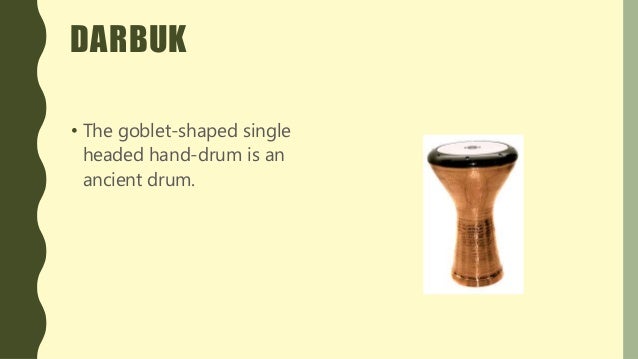
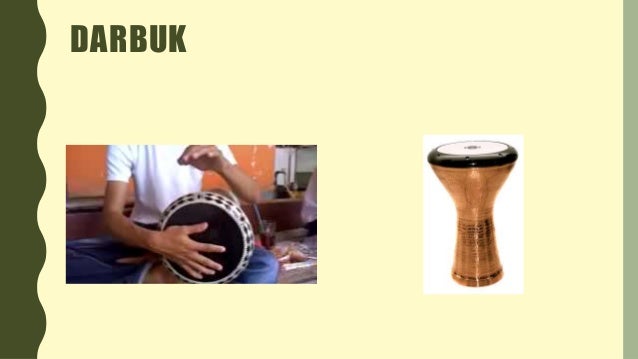
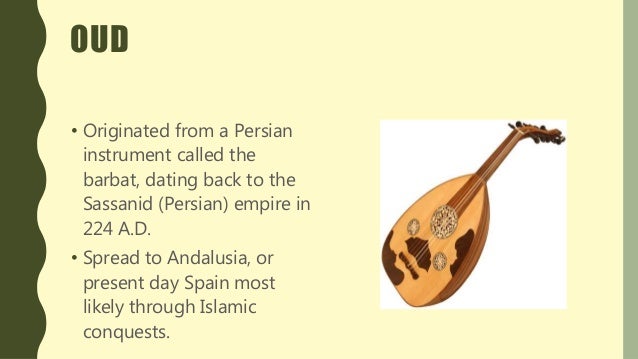
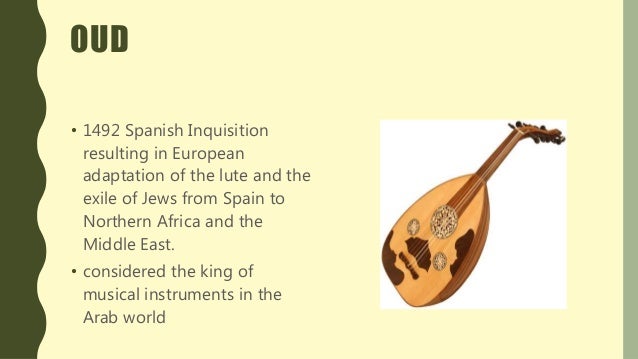
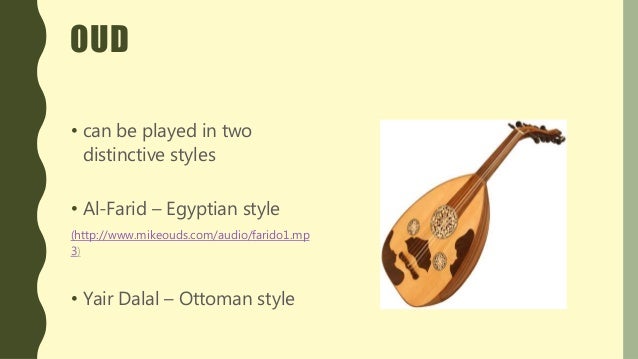
The Muzika Mizrahit movement started in the 1950s with homegrown performers in the ethnic neighborhoods of Israel – the predominantly Yemenite “Kerem Hatemanim” neighborhood of Tel Aviv, Moroccan neighborhoods and neighborhoods of Iranian and Iraqi immigrants – who played at weddings and other events. They performed songs in Hebrew, but in a predominantly Arabic style, on traditional instruments – the Oud, the Kanun, and the darbuka. Jo Amar and Filfel al-Masry, were two early proponents of Moroccan and Egyptian extraction. In the 1960s, they added acoustic guitar and electric guitar, and their sound became more eclectic. Vocalists typically decorated their singing with melisma and other oriental-style ornaments, and delivery was often nasal or guttural in character. Intonation was typically Western, however; singers did not use the quartertone scales typical of Arabic music.
.jpg)
Lyrics were originally texts taken from classic Hebrew literature, including liturgical texts and poems by medieval Hebrew poets. Later they added texts by Israeli poets, and began writing original lyrics as well. An example is the song “Hanale Hitbalbela” (Hannale was confused), sung by Yizhar Cohen. The lyrics are by the modern Hebrew poet and lyricist Natan Alterman, to a traditional tune.
In the 1970s and early 1980s, a few of these performers began distributing their songs on cassette tapes. The tapes were an instant hit. They were sold in kiosks in the rundown shopping area around the Tel Aviv bus station, and the music became known derogatorily as “Muzikat Kassetot”, cassette music, or “Bus station music”. Performers during this period included Shimi Tavori, Zehava Ben and Zohar Argov, whose song “HaPerah BeGani” (the Flower in my Garden) became a major hit. Argov, a controversial character who died in 1987 by suicide while in jail,[became known as the “King of Muzika Mizrahit”; he became a folk hero, and a movie was made of his life.
Despite the obvious popularity of this music, the state radio eschewed Muzika Mizrahit almost entirely. “The educational and cultural establishment made every effort to separate the second generation of eastern immigrants from this music, by intense socialization in schools and in the media”, wrote the social researcher Sami Shalom Chetrit.[
The penetration of Muzika Mizrahit into the Israeli establishment was the result of pressure by Mizrahi composers and producers such as Avihu Medina, the overwhelming, undeniable popularity of the style, and the gradual adoption of elements of Muzika Mizrahit by mainstream artists. Yardena Arazi, one of Israel’s most popular stars, made a recording in 1989 called “Dimion Mizrahi” (Eastern Imagination), and included original materials and some canonic Israeli songs. Also, some performers started developing a fusion style of Muzika Mizrahit, Israeli, Greek, rock, and other styles. These included Ehud Banai, Yehuda Poliker, and Shlomo Bar, whose group “HaBrera HaTivit” (The Natural Choice, or the Natural Selection) incorporated Sitars, tabla, and other Indian instruments to create a new, “World” style.
The acceptance of Muzika Mizrahit, over the 1990s, parallels the social struggle of Israelis of Mizrahi origin to achieve social and cultural acceptance. “Today, the popular Muzika Mizrahit has begun to erase the differences from rock music, and we can see not a few artists turning into mainstream… This move to the mainstream culture includes cultural assimilation”, writes literary researcher and critic Mati Shmuelof.[
Hassidic and Orthodox Jewish music
The Orthodox Jewish community of Israel, and its parallel community in the United States, have developed a unique form of Hassidic rock, which has become popular throughout the young orthodox community. This musical form combines the sonorities, instrumentation and rhythms of rock music with melodies which are in a klezmer style, and words taken mostly from religious texts. This rather anomalous combination is produced, performed and broadcast in nearly complete segregation from secular Israeli music. It is never heard on secular radio stations, or in secular public performances. It is broadcast on religious radio stations and played at religious events.
One of the pioneers of Hassidic rock was the “singing rabbi,” Shlomo Carlebach, who developed a large following in New York in the 1960s, singing religious songs in a folk style reminiscent of Peter, Paul and Mary. Israeli Hassidic rock performers include the group Reva L’Sheva and singers Adi Ran and Naftali Abramson. Because of an halakhic restriction on women singing to mixed audiences, there are no women in Hassidic rock groups. Concerts will usually be gender segregated.[
While the style is embraced enthusiastically by the religious Zionist movement, including Gush Emunim, it is not without its opponents within the Haredi community.[ Some Haredi rabbis have “a hard time with someone screaming out ‘Yes, there’s the Holy One, blessed be He’ at the top of his lungs all of a sudden”, says Kobi Sela, religious music critic.
Israeli Arab music
Main article: Music of Palestine

Amal Murkus talks about her art
The Arab community in Israel, comprising 20 percent of Israel’s permanent population at the end of 2007,[ has developed its own unique forms of musical expression.
Until the early 1990s, little original music was produced by this community and the focus was on the great stars of the Arab world – Umm Kulthum, Fairuz, Farid al-Atrash, and others. Original local music did not achieve popularity or wide distribution among the local population until the 1980s.[For the most part, local performers at weddings and other events played music written in Egypt, Lebanon, and Syria.
With the onset of the 21st century, local stars emerged, among them the internationally acclaimed oud and violin virtuoso Taiseer Elias, singer Amal Murkus,[ and brothers Samir and Wissam Joubran. Israeli Arab musicians have achieved fame beyond Israel’s borders: Elias and Murkus frequently play to audiences in Europe and America, and oud player Darwish Darwish (Prof. Elias’s student) was awarded first prize in the all-Arab oud contest in Egypt in 2003.
Living as an Arab minority within Israel has been an influence on Israeli Arabs, which is reflected in their music. Israeli Arab musicians are in the forefront of the quest to define their emerging identity. Lyrics deal with issues of identity, conflict, remembrance and peace. For example, Kamilya Joubran’s song “Ghareeba”, a setting of a poem by Khalil Gibran, deals with a sense of isolation and loneliness felt by the Arab Palestinian woman.

Several groups have emerged, such as Elias’s Bustan Avraham,[86] The Olive Leaves, and Shlomo Gronich’s Israeli-Palestinian ensemble in which Jews and Palestinians perform together, creating a fusion style of music. Joint musical bands such as Zimrat Yah, Shams Tishrin, Blues Job, and Sahar, appear all over Israel, particularly in the Galilee.The Olive Leaves gave a successful concert tour in Jordan in 1995, with lead singer Shoham Eynav (Jewish) singing songs in both Hebrew and Arabic.[
Israeli Arabs have also branched out into other musical styles. Palestinian hip-hop artist Tamer Nafar, founder of the rap group DAM, became an independent rap star after a politically charged dispute with Israeli rapper Subliminal.[His music expresses the frustration and alienation that many Israeli-Palestinians feel. The rock music of Basam Beromi, singer of the group “Khalas” (Enough!), protests against the strictures of traditional Arab society. The song “What have we come to?”, for example, tells the story of a young girl in love, whose family murders her for violating strict traditional codes of courtship. London-trained guitarist Michel Sajrawy combines jazz, rock, and gypsy with classical Arab music.
While music education for Israeli Arabs is less developed, there has been a steady growth of opportunities in this sector. The Jerusalem Academy of Music and Dance has an advanced degree program, headed by Taiseer Elias, in Arabic music. In 2007, the first precollege conservatory for the Arab-speaking population opened in Shfaram.[
Iraqi Jewish music
See also: Music of Iraq
The Iraqi Jews who immigrated to Israel in the early 1950s have preserved their own musical tradition. In the first half of the 20th century, almost all professional instrumental musicians in Iraq were Jewish.[They played in the Imperial Orchestra, in the Baghdad radio orchestra, and in the nightclubs of Baghdad. Leading performers included composer and Oud player Ezra Aharon, violinist Salih Al-Kuwaiti and his brother, oud player Dawud Al-Kuwaiti, composer Salim Al’Nur,singer Salima Pasha, and others. Between 1949 and 1950, almost all these professional musicians fled Iraq for Israel. The Israel Broadcasting Authority (IBA) Arabic Orchestra was instrumental in sustaining their musical traditions in Israel.
Many of these musicians were forced to seek employment outside the music business, but they continued to perform in the community. “Our musical tradition continues”, said Suad Bazun, singer and daughter to a family of leading Iraqi musicians. “Today the grandchildren and the great-grandchildren continue to fill their homes with the songs of Iraq.”
Yiddish and Ladino music
Yiddish and Ladino are enjoying a revival in Israel. A number of private language institutes and universities[ offer programs in these languages, which were the spoken languages of Jews of the Diaspora. A Yiddish theater group, the YiddishShpiel, in Tel Aviv, offers popular musical shows. Several leading Israeli artists have recorded songs in these languages, including an album in Ladino by Yehoram Gaon and an album in Yiddish by Chava Alberstein.
Also, a number of new anthologies of Yiddish songs have been compiled, including a seven-volume anthology edited by Sinai Leichter, published by the Hebrew University in Jerusalem.[
Music of migrant workers
In 2006, there were an estimated 165,000 migrant workers in Israel.They come from the Philippines, Thailand, India, China, Africa, Eastern Europe, and elsewhere. Each community of migrant workers has its own musical culture. A visitor to the neighborhood of the Central bus station in Tel Aviv will hear strains of popular music from Addis Ababa, Bangkok, and Manila. Foreign workers also have their local popular music groups, that perform at parties and on holidays.
Israeli Musical Instruments



 MAPEH
MAPEH 